REPORTPickup Report

“French with inflection” that reflects Shinshu’s terroir and the spirit of Japan | L'inflexion(ランフレクション)

2025.11.17

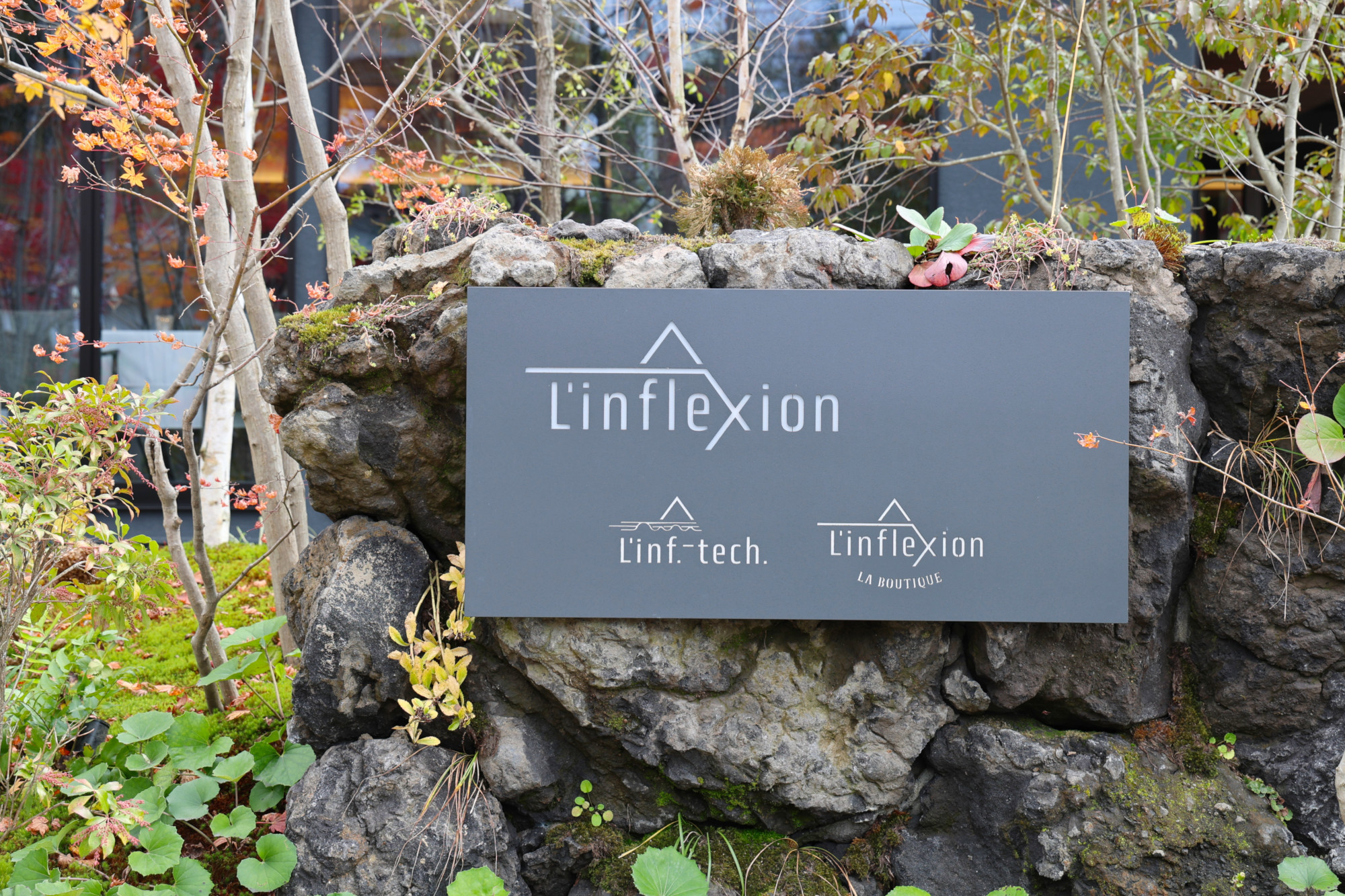
In August 2025, in Karuizawa, an expressive French restaurant "L'inflexion" opened.
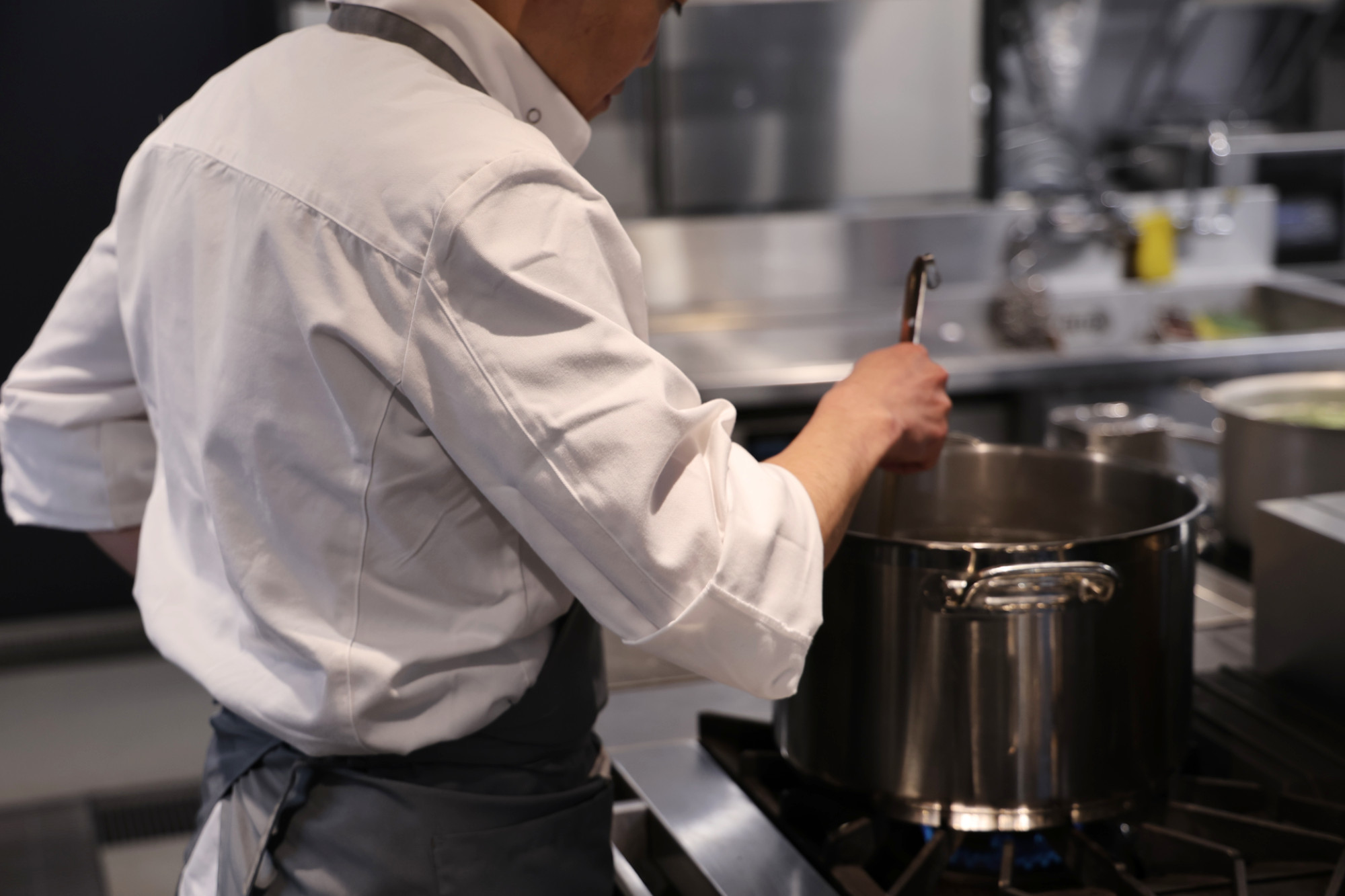
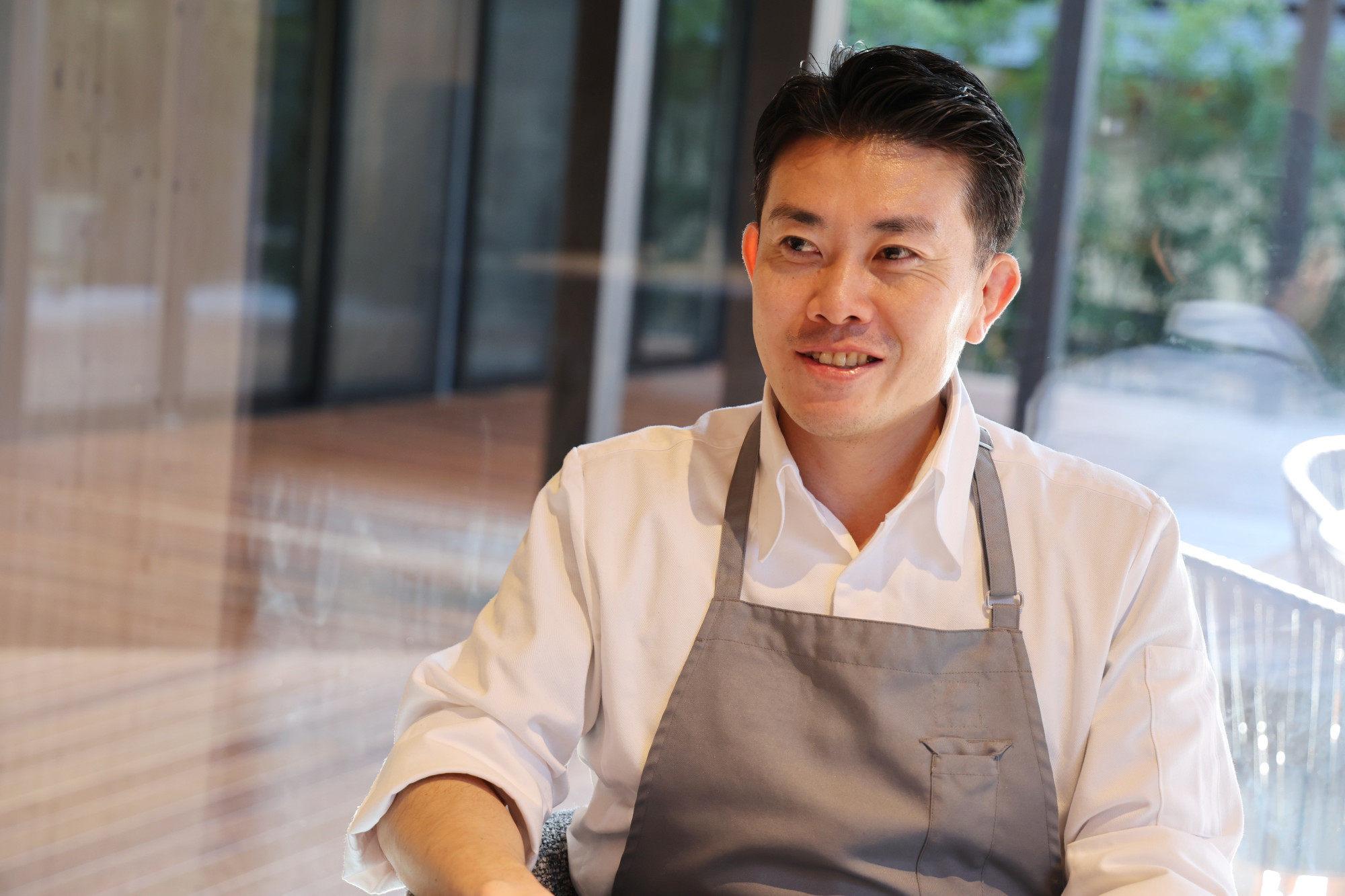
Chef Kashiwagi is a proven talent who honed his skills in Tokyo, Hokkaido, and France.
Layering Japanese sensibilities onto French techniques, he weaves dishes that reflect the terroir of Shinshu.

“L'inflexion = modulation”.
We asked about the thoughts behind that word and his view of Karuizawa.

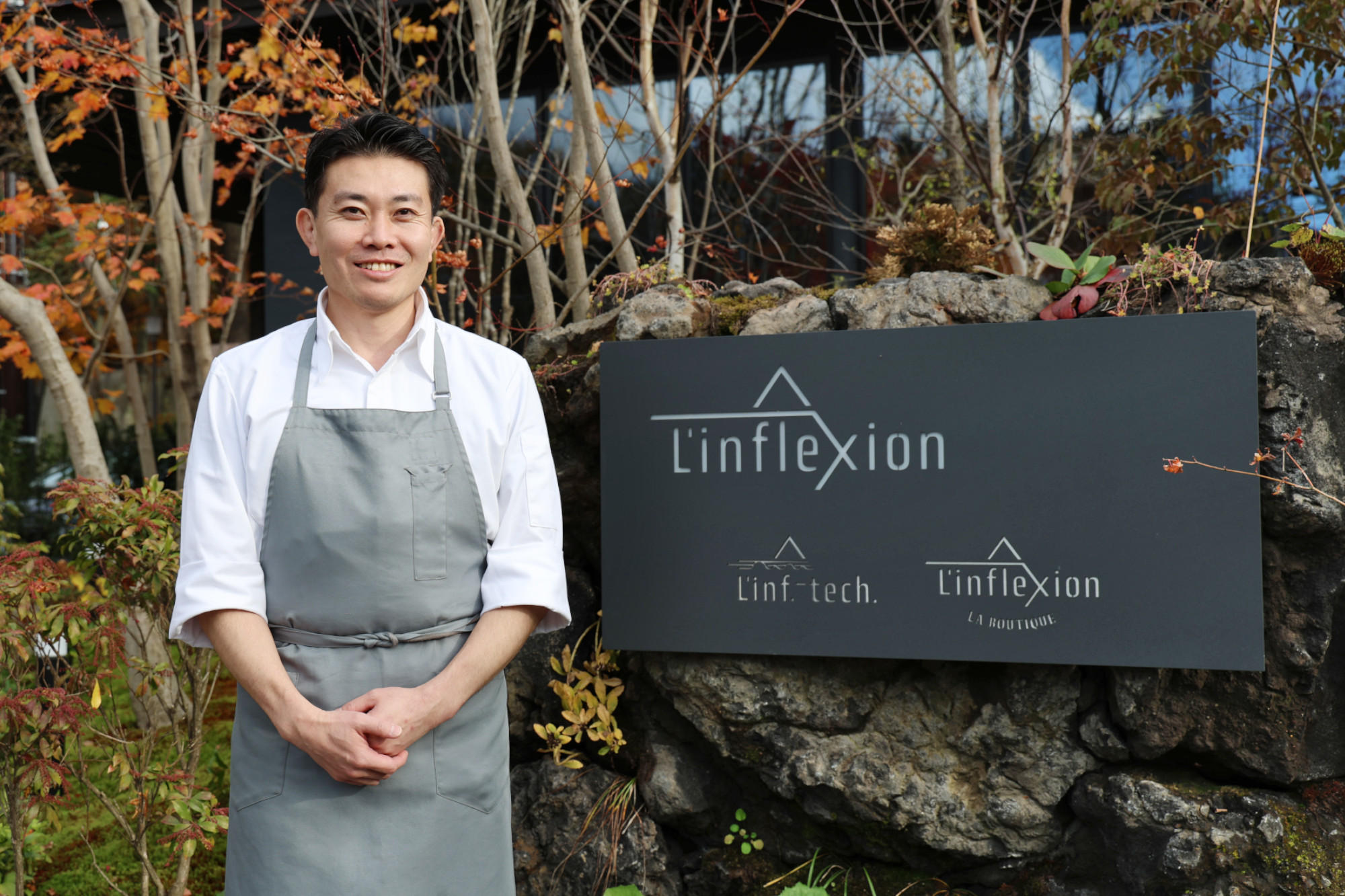
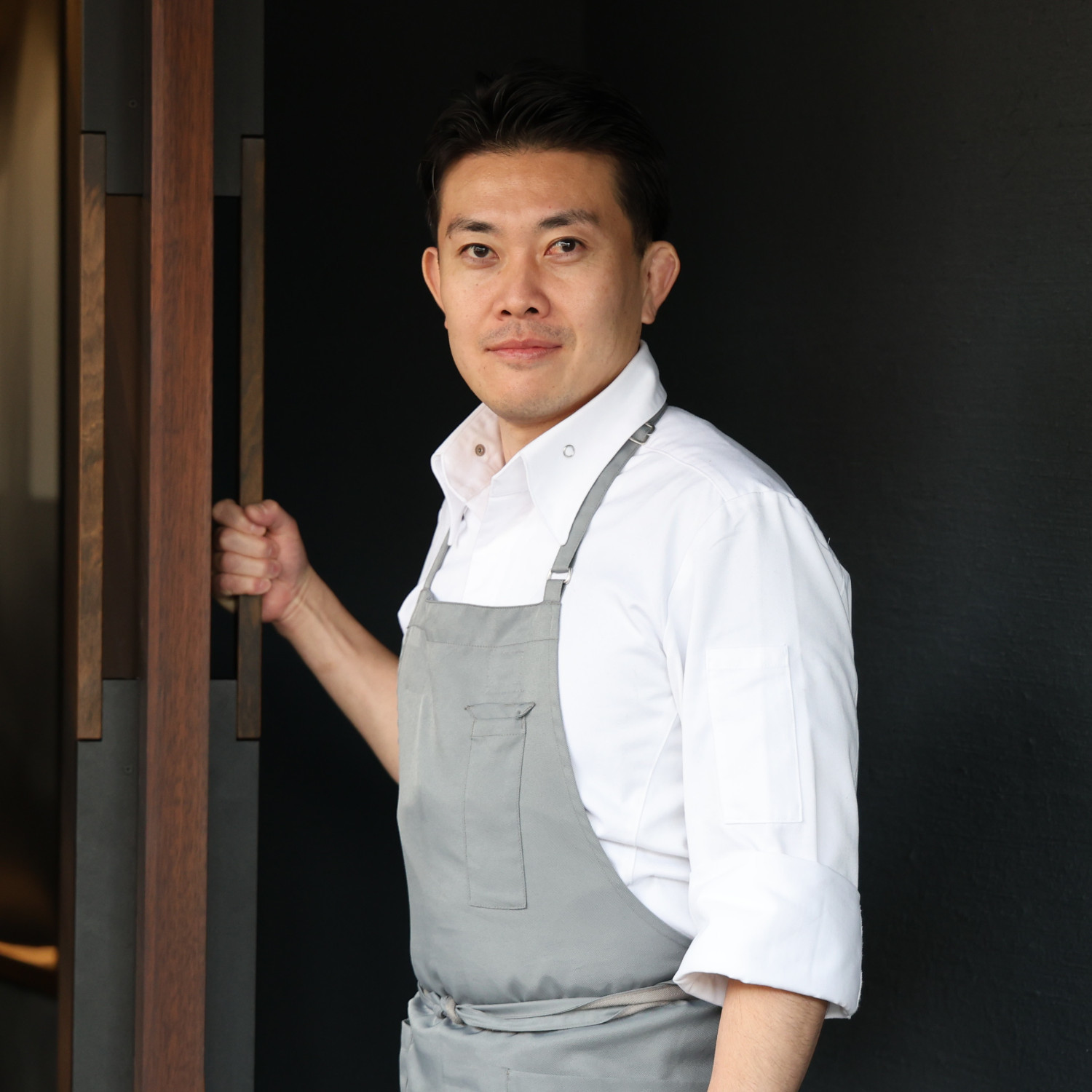
オーナーの写真
L'inflexion Chef
柏木 暢介 Kashiwagi Yousuke

Born in Adachi City, Tokyo. He set his sights on a culinary career in high school and, after graduating from a vocational school, learned the fundamentals of French cuisine. He later went to France, where experience in its homeland led him to reexamine his “sensibilities as a Japanese.” After returning to Japan, he served as a chef at restaurants in Tokyo and joined the launch of L’inflexion in Karuizawa. He pursues dishes with modulation, layering Japanese aesthetics and Shinshu’s terroir onto French techniques.

The Chef’s Path ― From Downtown Tokyo to France

Where are you from?
"I’m from Adachi Ward in Tokyo. I grew up in an old downtown atmosphere. There weren’t people with particularly special professions around me, but I had an uncle who worked as a carpenter, and I admired how he had a craft in his hands—I thought it was cool."
What led you to pursue cooking?
"Among the options I had, cooking felt the most familiar. It started in high school when I became interested, wondering, “What kind of world is French cuisine?” There were neighborhood Chinese places, soba shops, and Italian spots, but French was the one thing that wasn’t close at hand. I was drawn to that unknown world."
And after graduating high school?
"I went on to a culinary school in Tokyo. After graduating, I went to the Windsor Hotel in Toya, Hokkaido. I had a longing for the countryside. Around that time, a branch of the three-star French restaurant “Michel Bras” was set to open on the top floor, and when I saw the job posting I thought, “I want to learn here,” applied, and was hired. After that I learned the basics at a classic French restaurant in Sapporo, and then finally went to France as I had long hoped. I taught myself the language, sent my resume, obtained a visa, and moved there."

Ties with Karuizawa ― Guided by an “invisible thread”

How did you first encounter Karuizawa?
「I was fortunate in my previous job to meet our company’s representative, and I resonated with the philosophy and vision; when I was entrusted with the role of head chef for the Karuizawa project, that was precisely my first encounter with Karuizawa.」
Were you originally interested in Karuizawa?
「No, to be honest, I didn’t know it at all. I’d only been once to the outlet mall and had no sense of the area. However, the restaurant 『Michel Bras』 in Toya, Hokkaido, where I first worked, had planned to relocate to Karuizawa before COVID. Hearing that, I thought, “So Karuizawa is such an attractive place.” In the end the plan didn’t come to fruition, but I myself have been strongly influenced by Michel Bras’s cuisine, so I feel as if I’ve been drawn here by an “invisible thread.”」
Does the environment here influence your cooking?
「Yes. I’m not sure how much I can evaluate it myself, but my sensibilities are completely different from when I was working in Tokyo. I try to source as many ingredients as possible from Shinshu/Nagano, with a desire to take root in this region and move forward in step with the local people. How much of that is reflected in the dishes, I’d like to leave to the judgment of those who come to eat. That said, I definitely feel that my “perspective” and “way of seeing things” have changed.」

Cuisine with “抑揚” ― French cuisine alive with Japanese sensibilities and the spirit of Shinshu

What does the restaurant name “ランフレクション” mean?
「 “ランフレクション=modulation”  — that’s what it means. Both French tasting menus and Japanese kaiseki create a flow by building contrasts — cold and hot, crisp and fluffy — adding dynamics along the way. Putting that “change of rhythm” into words is “modulation.” The idea is for guests to enjoy the meal like music, feeling the tempo and the lingering resonance.」

「There is another meaning as well: we take “amino acids” as a motif. For example, katsuobushi, cheese, asparagus — even though they all offer “umami,” the types of amino acids differ. A succession of similar tastes can become tiresome, but by weaving in differences in temperature, aroma, and texture, “modulation” emerges. We chose this name with the wish to express such a three-dimensional rhythm through cuisine.」
What is the theme of your cuisine?
「 “French × Japanese identity × Shinshu’s terroir”  — that is my theme. I layer the theory of French cuisine with Japanese aesthetic sensibilities and the nature and cultural life of Shinshu. While living in France, I realized that “I knew nothing about Japan,” and seeing it from the outside made me strongly drawn to Japanese culture and spirit.」

「Japanese cuisine is an aesthetics of “subtracting,” while French cuisine is an aesthetics of “layering.” Moving back and forth between the two, I aim for dishes that “purify and compose” the ingredients.」
 

Reflecting the terroir of Shinshu ― Two emblematic dishes


A dish that reinterprets Saku’s local specialty “koikoku,” and a vegetable dish inspired by the kuroboku soil of Tsumagoi.
Both are plates that symbolize Chef Kashiwagi, themed on “memories of the land and people of Shinshu.”

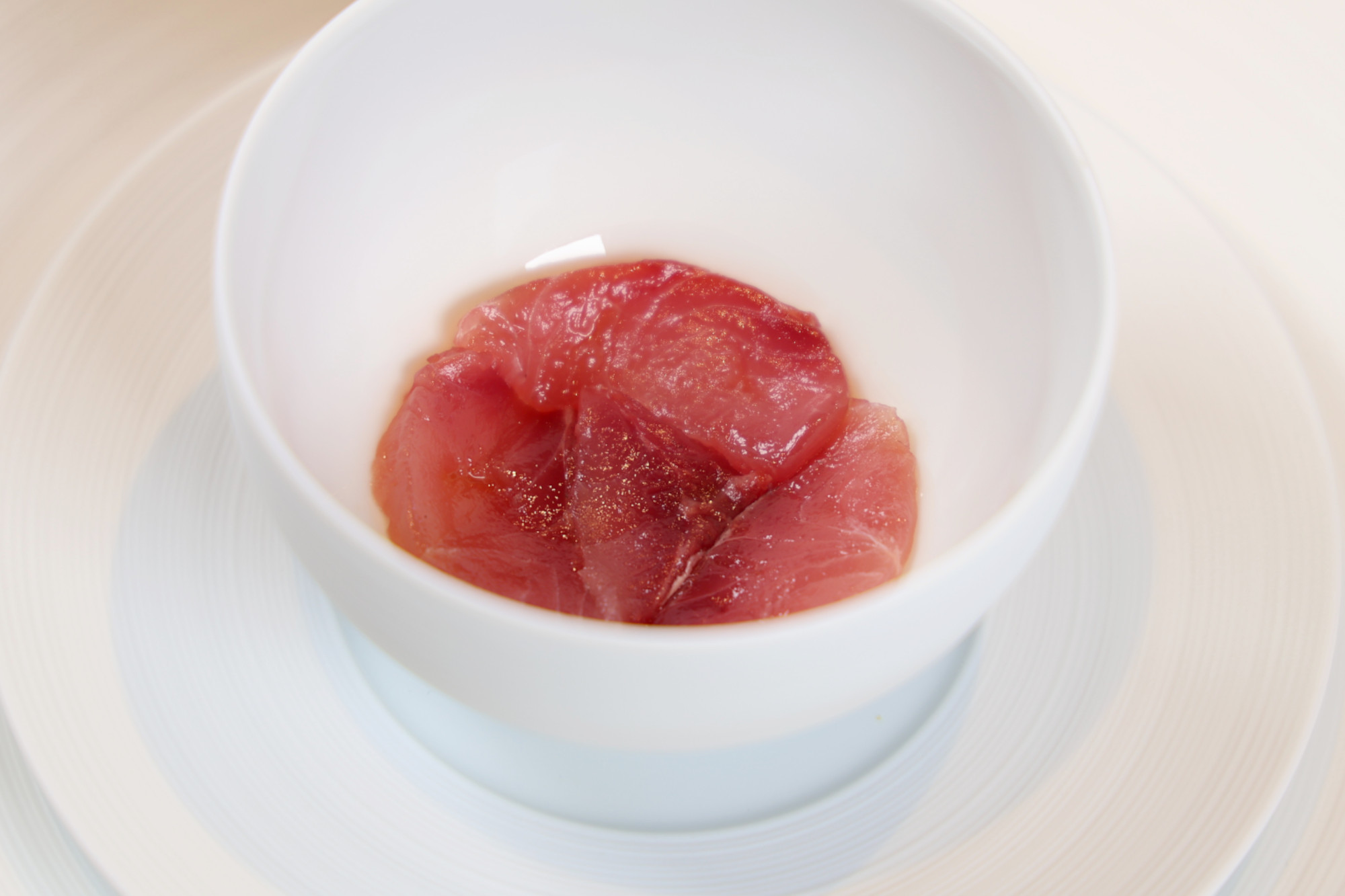
「Basing it on “koikoku,” I brought together in one plate various ways of eating carp, such as arai and shabu-shabu. Fresh carp with the bones carefully removed is made tender enough to eat with a spoon. To the clear umami of Shinshu miso, I layer the amino acids of crustaceans to add depth. The distinctive smell of raw carp is turned into aroma by lightly brushing soy sauce — an idea akin to Japan’s sashimi culture. While valuing the local taste, I finished it as a dish that feels distinctly Shinshu.」

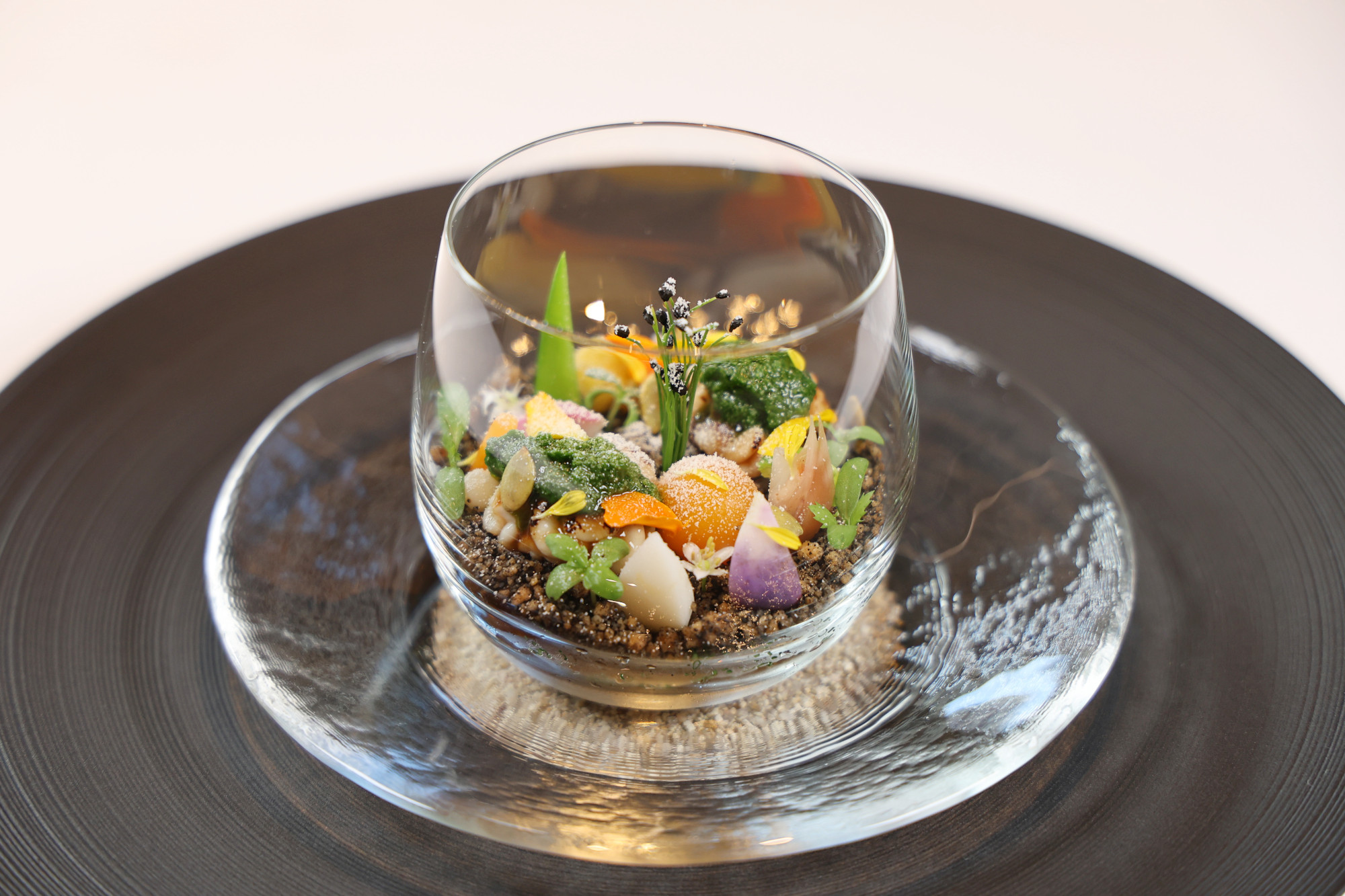
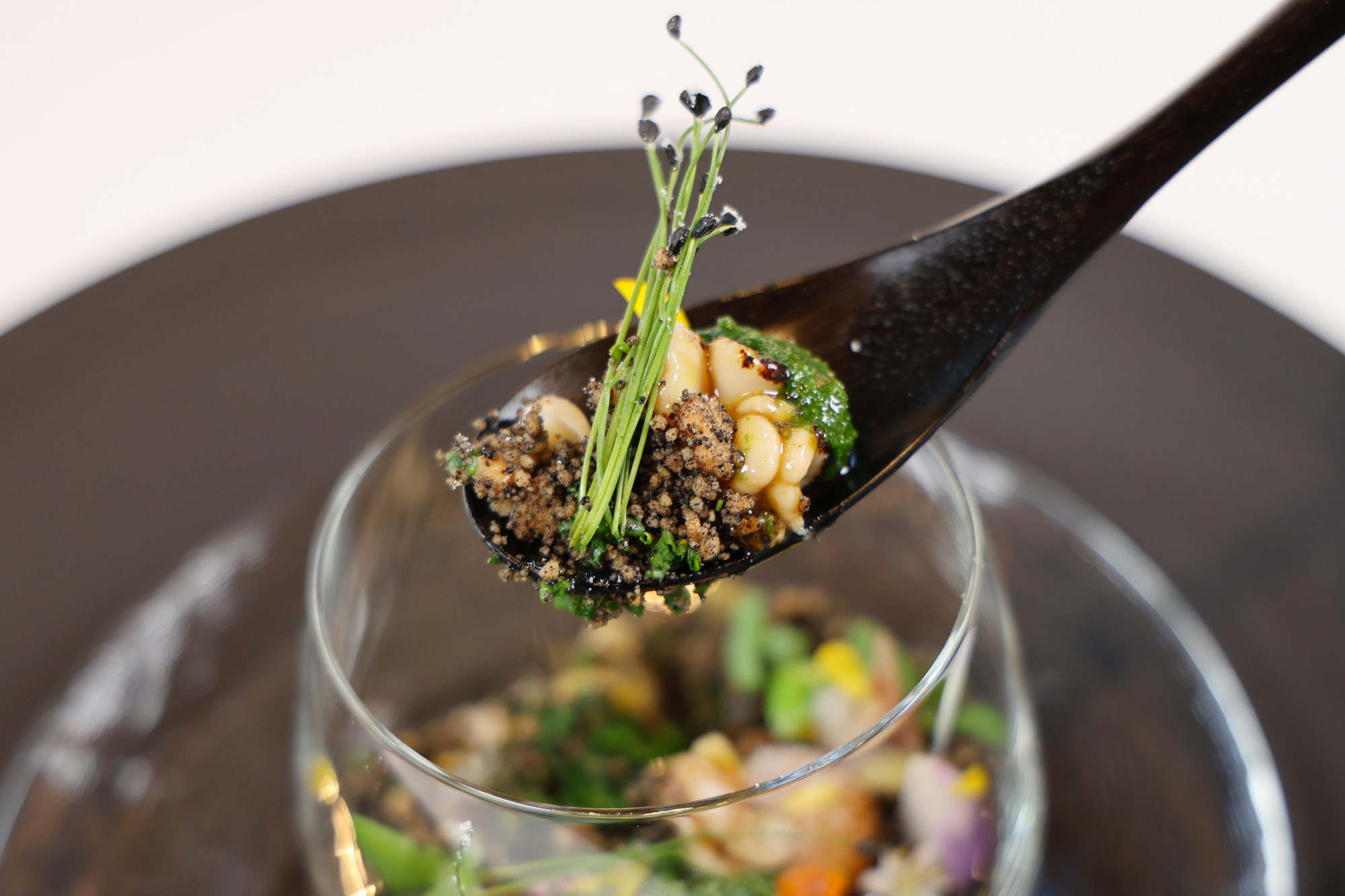
「We express the soil of Shinshu and people’s livelihoods through a three-layer composition of root vegetables, fruiting vegetables, and leafy vegetables. The bottom layer is a jelly made from dashi using “dried squid”. Like kombu, it draws out umami, layered with the savory flavor of fermented soybeans. The motif is the black volcanic-ash soil of Tsumagoi. There is a history of cultivating, through human wisdom and effort, soil that was originally ill-suited to growing crops. Through vegetables rooted in the black earth, we have put into a single dish the character of Shinshu’s climate and the strength of the people who live there.」

 
Are there differences between the lunch and dinner courses?
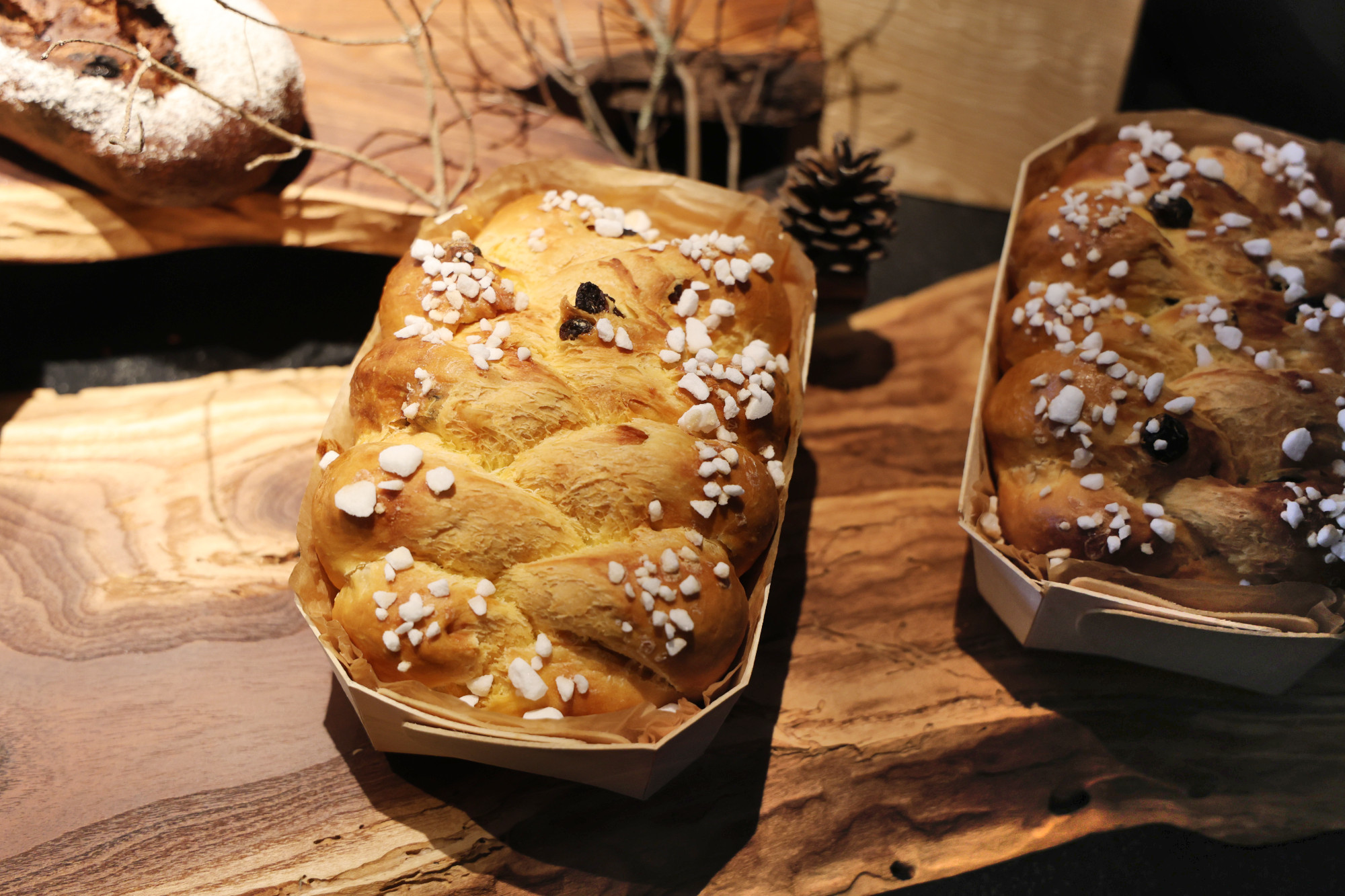
「We call lunch “ランフテック”, a composition that condenses the “ランフレクション techniques (Technique)“. While keeping prices in check, we make it possible to experience our worldview, using some of the same ingredients. We serve a variety of “freshly baked bread from a stone oven,” made with carefully selected ingredients centered on French wheat by our chef-boulanger, using original recipes and processes with our own natural yeast.」
There is also a boutique attached, isn’t there?
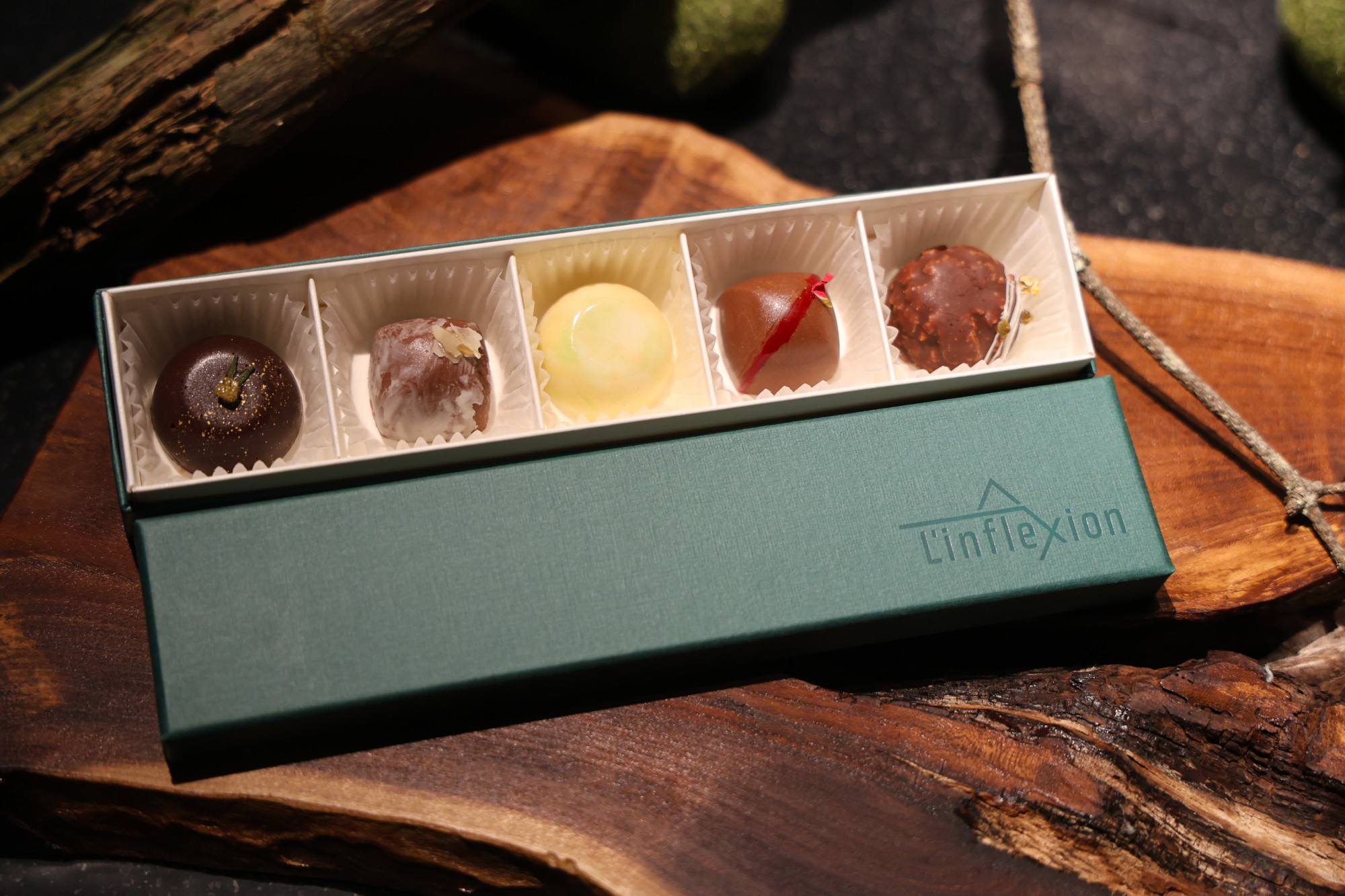
「Yes. At the boutique, we take pre-orders for chocolates, brandy cake, stollen, red-wine bread, and brioche, among others. We never compromise on ingredients, and we also weave elements of Shinshu in here. We offer items across a wide range of price points.」
Beyond the cuisine, do you also have particular commitments to the building and the space itself?
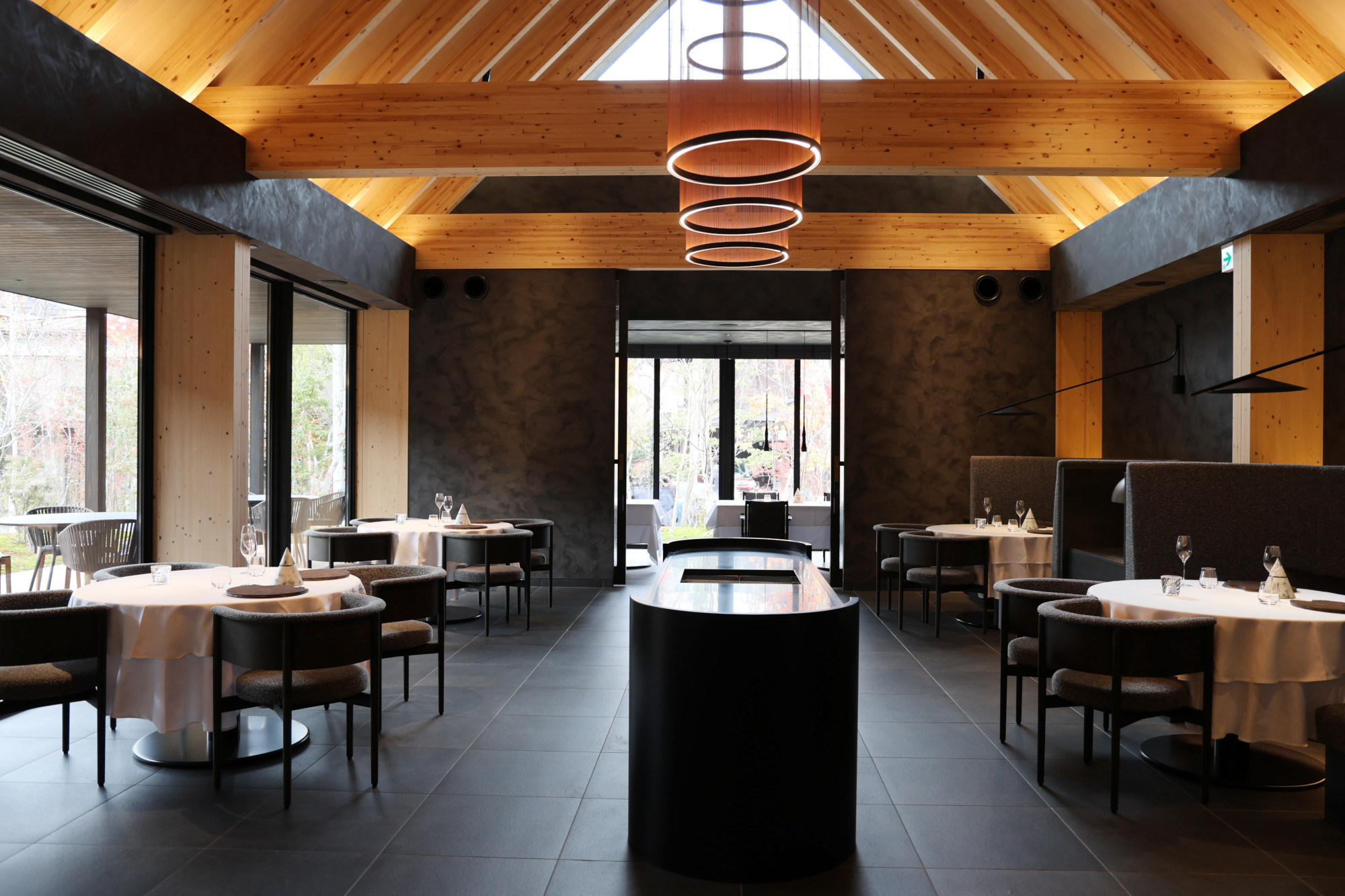
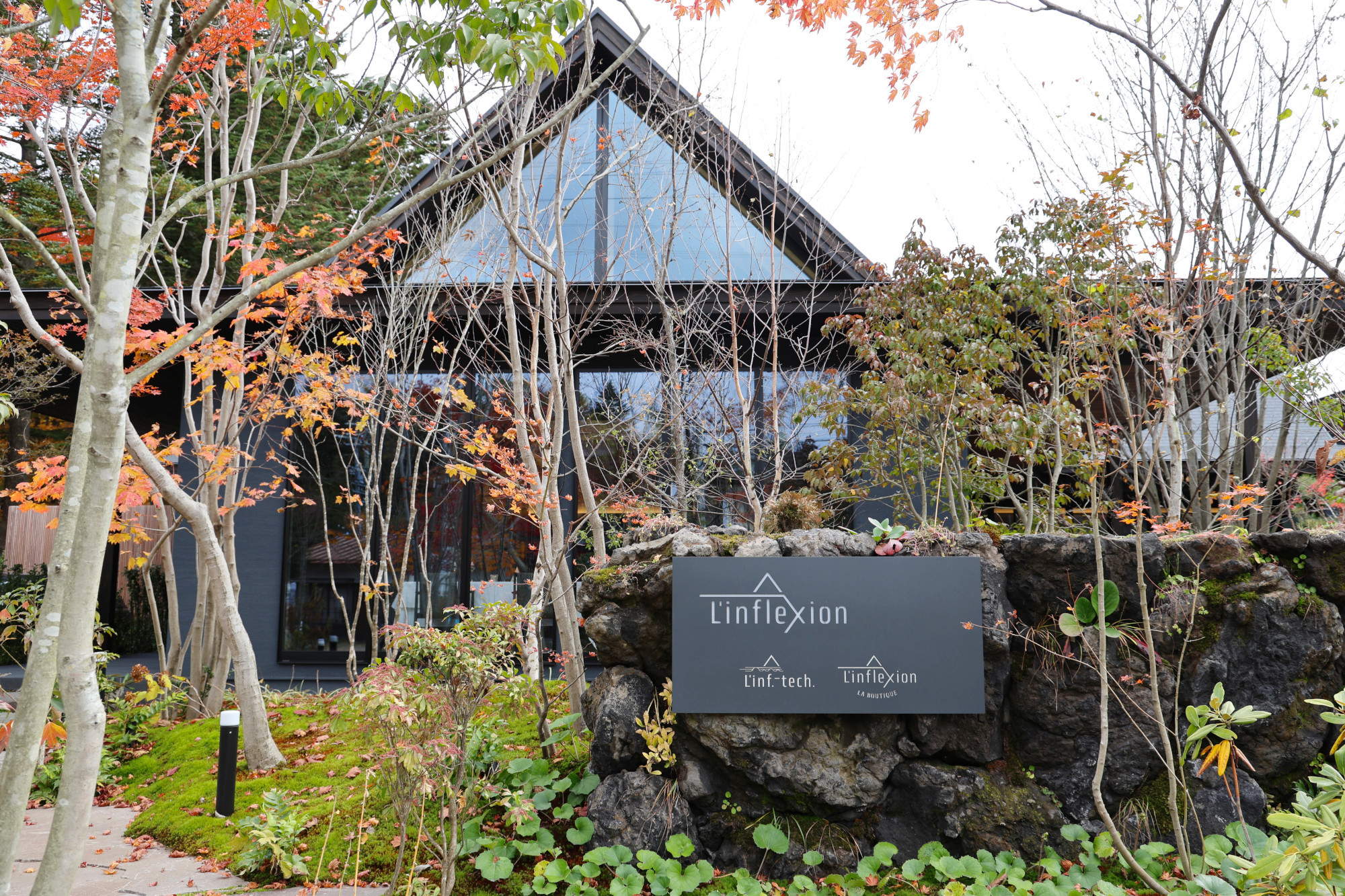
「“Fusion of Japan and the West“ is at the core, which is also a keyword for unraveling Karuizawa’s modern history. In addition, mountain worship is rooted in Shinshu, and the chapels scattered throughout Karuizawa were also places of faith. As a sacred place where we receive life, the restaurant’s gassho-style architecture—common to both Japanese and Western traditions—expresses gratitude for nature’s blessings, and the garden is designed with Shinshu’s trees to evoke the moss-covered forests favored by our predecessors. Building on inherited wisdom and techniques with first-rate materials and a solid foundation, then simplifying, refining, and fusing them—this commonality in the concept, where the backgrounds of cuisine, place, and architecture converge at a single point, is also the theme of the space.」

From Karuizawa to the future — Together with the community

In Karuizawa, has anything left a lasting impression on you?
「Soon after we opened, during dinner time, someone casually opened the door and came in asking, “What kind of place is this?” That almost never happens in Tokyo. Since we’re a restaurant where the bill can be on the higher side, a kind of “wall” tends to form, but people in Karuizawa are truly down-to-earth. There’s a warmth in the way they casually strike up a conversation, and it made me think, “Ah, what a wonderful place.”」
Do you also have connections with local producers?
「Yes. It’s only just begun, but we value our ties with people in the community. Our restaurant embraces the philosophy of “contributing to the community,” and I personally resonate with that strongly. As for carp, at first I simply called the Saku Fishery Cooperative directly to ask for it. “We’d like some carp” (laughs). It’s delightful to see relationships grow out of such exchanges. Now, through organic farmers in Matsumoto and introductions from farmers I was connected with back in Tokyo, our network is gradually expanding across the whole Shinshu region.」
Please tell us about your future outlook.
「We have a desire to put down firm roots in this place. As part of that, by collaborating with municipalities, local industries, and educational institutions, we hope to contribute to the community by conveying rich dining experiences and a spirit of service, to serve as a bridge connecting people and food culture, and ultimately to help elevate the appeal of Karuizawa as a whole. At the same time, we are working each day with a strong determination to cultivate this restaurant itself into a hub that symbolizes Karuizawa’s gastronomic culture.」
Lastly, please share a message with those reading this article.
「Food is something that can’t be fully conveyed in words. That’s why I believe it only truly comes across when you eat it and experience it yourself. We would be delighted if you would visit us and feel “ランフレクション” with all five senses. We look forward to welcoming you.」
Karuizawa「ランフレクション」── Within each plate resides the beauty of layering and the beauty of purification.
The “French with modulation” that Mr. Kashiwagi pursues sketches a new vision of French cuisine in which Japanese sensibilities resonate with the climate of Shinshu.


This time, the one who cooperated with our interview was Chef Kashiwagi.
Try saying “I saw Karuizawa Navi~” to start the conversation and it might really take off~

Shop Information

Shop name
L’inflexion(ランフレクション)
Opening
August 18, 2025
Address
〒389-0102 1203-6 Karuizawa, Karuizawa-machi, Kitasaku-gun, Nagano
Business hours
【Reservations required】
Lunch 11:30-14:00(L.O.12:30)
Dinner 17:30-21:30(L.O.19:00)
LA BOUTIQUE〈Boutique〉 11:30-17:00 ※Hours may vary
Closed
Irregular days off
※A winter closure is planned starting February 2026. Please check the official website for details.
Parking
3 spaces (please contact in advance if you wish to use)
Page
Official SNS
  • ig
 

Author of this article

VIA・KARUIZAWA Editors

The Karuizawa Navi editorial team visits the area in person to bring you articles on recommended local shops, tourist attractions, model itineraries, and more!